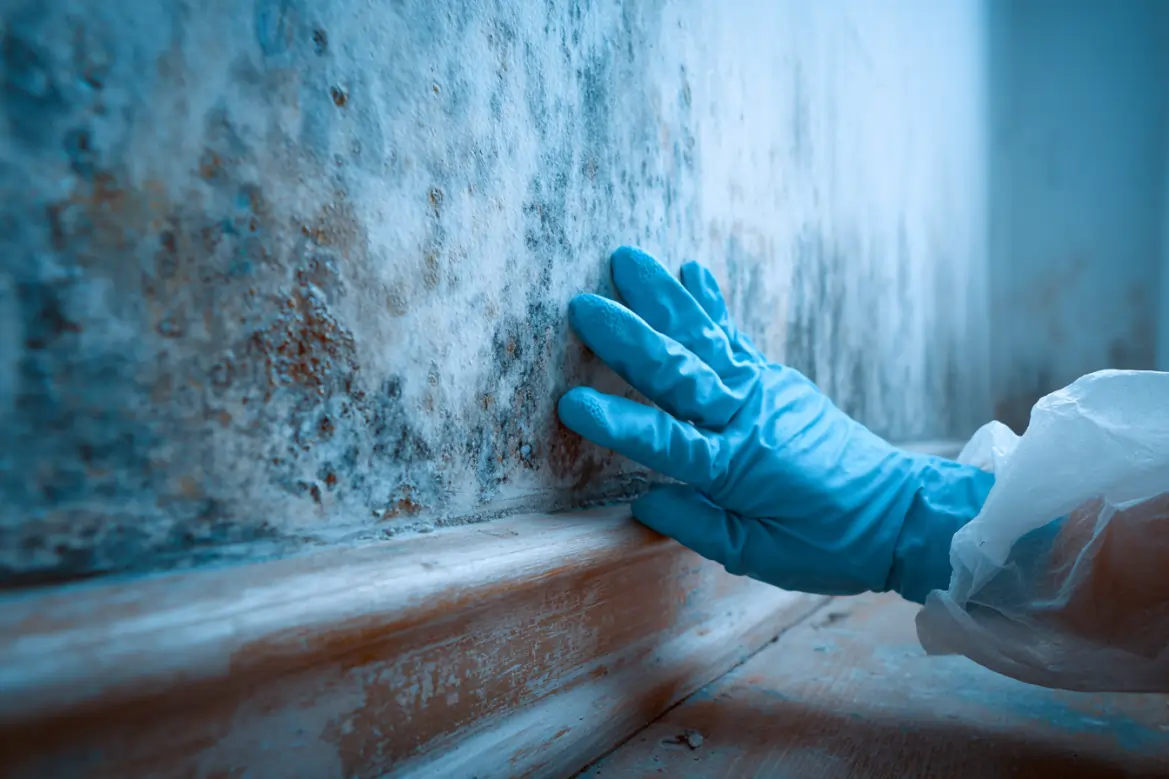
There’s something ancient about the air in Stuart, Florida. It moves with a rhythm that feels tidal, heavy with memory, humming with salt. Here, humidity isn’t just weather — it’s an element, a presence that wraps around every structure, whispering through wood grain and window seams.
And where there’s humidity, mold listens.
But along the Treasure Coast, a new discipline is emerging — one that treats the battle against mold not as a chemical war, but as an act of ionic geometry. It’s called the Salt-Line Sanctum, and it transforms homes into sanctuaries through the oldest purifier known to sea and spirit alike: salt.
The Philosophy of Ionic Protection
At the heart of the Salt-Line Sanctum lies a simple revelation:
Salt remembers order.
In nature, salt crystals grow in precise lattices — perfect cubes that resist chaos. Mold, by contrast, thrives on disorder: excess moisture, stagnant air, and emotional entropy. When these two forces meet, one harmonizes and the other dissolves.
By intentionally embedding salt into a home’s energetic and architectural field, practitioners of the Sanctum method believe they can create ionic boundaries — invisible lines of balance that repel mold at both the physical and atmospheric levels.
To put it simply: when your walls hum with salt’s geometry, mold can’t find its way in.
Step One: Preparing the Boundary Field
Creating a Salt-Line Sanctum begins not with salt, but with attention.
Before any material preparation, homeowners are asked to listen to their space. Mold thrives where neglect gathers — under sinks, behind forgotten bookshelves, in emotional corners of the home where stillness has curdled.
Walk your perimeter slowly. Notice where air feels thick, where shadows linger even at noon. These are your vulnerable points — your “humidity portals.”
Once identified, sprinkle fine sea salt (preferably from local waters, to align with Stuart’s oceanic field) along thresholds, baseboards, and window sills. Each grain acts as a molecular sigil — a statement to the air itself:
“This boundary holds clarity.”
For best results, perform this at dawn, when the subtropical mist still hovers low, and the first light of day can fuse intention with atmosphere.
Step Two: Activating the Ionic Current
The second stage of the Sanctum involves awakening the salt from static to dynamic — turning it from substance to field.
Salt alone absorbs moisture, but when charged, it radiates stability. To activate the ionic current:
-
Place a bowl of warm, purified water in the center of your home.
-
Dissolve one tablespoon of your boundary salt into it.
-
Using a copper spoon (symbol of conductivity), stir clockwise thirteen times.
-
As you stir, speak the activation phrase:
“Air, remember your balance. Water, return to form.”
This vocal resonance aligns the salt’s ions with your voiceprint, creating a sympathetic field that extends through the home’s atmosphere. The result is what physicists might call a charged humidity gradient — an airfield that discourages fungal colonization on a molecular level.
Step Three: The Architectural Sigil
For more advanced practitioners, the Salt-Line Sanctum extends beyond cleaning rituals into structural resonance design. Architects on the Treasure Coast have begun integrating ion-conductive pathways into their blueprints — subtle channels of mineralized resin running beneath floors and within walls.
These channels don’t conduct electricity. They conduct stability.
When the sea breeze hits a properly tuned Sanctum home, ions from the air interact with those within the walls, generating a continuous exchange of order — a kind of architectural respiration. This creates a self-sustaining barrier where mold cannot cling, because the very air refuses to remain still long enough for decay to begin.
Some call this “ionic architecture.” Others simply call it home in harmony with the sea.
The Salt Rites of Stuart
It’s no accident that the Salt-Line Sanctum found its first adherents in Stuart. The town’s geography — nestled between river and ocean, saltwater and freshwater — generates one of the most complex humidity ecosystems in Florida.
Locals joke that you can feel the weather changing inside your lungs before it hits the sky. But those same microclimates that breed mold also make Stuart the perfect laboratory for energy-balancing experiments.
Homeowners who’ve adopted the Sanctum approach report not only reduced mold presence, but a tangible shift in mood: air that feels lighter, calmer, somehow intentional.
“It’s like the house exhales differently,” says one resident from Riverside Drive. “Even my mirrors stopped fogging with anxiety.”
Case Studies Along the Treasure Coast
The Saline Veranda – Ocean Boulevard
After years of battling recurring mold spots, a homeowner embedded fine salt lines into her veranda tiles. Within two weeks, the discoloration faded — and her cat stopped staring nervously at the walls.
The Cathedral House – Downtown Stuart
A yoga studio installed mineral-infused vents to disperse ions during morning classes. The building not only stayed mold-free during the wet season — students reported deeper breathing and fewer colds.
Seawall Sanctuary – Palm City Bridge View
A retired engineer created an automated “Salt Pulse System” using mist diffusers synchronized with tide cycles. The home now releases microbursts of charged air every high tide, mimicking the ocean’s cleansing breath.
The Science Behind the Sanctum
While the mystical language of the Salt-Line Sanctum may sound esoteric, its foundations echo real science. Negative ions — abundant in sea air, salt caves, and storms — are known to reduce airborne pathogens and improve respiratory function.
Mold spores, being positively charged, are naturally repelled by environments rich in negatively charged ions. The Sanctum simply ritualizes this phenomenon — blending environmental science with architectural mindfulness.
By turning ion balance into an act of design, homeowners move beyond cleaning toward communion — not eradicating nature, but cooperating with it.
Step Four: Renewal and Gratitude
Like any living field, the Sanctum requires renewal. Every lunar cycle, replace the boundary salt. Dispose of the old grains by returning them to the sea — never the trash. This symbolic gesture completes the Ionic Covenant: salt comes from water, purifies your air, and returns to water cleansed of its burden.
Before releasing it, whisper gratitude:
“Thank you for holding the line.”
The ritual reinforces the feedback loop between home and horizon, reminding the structure that it is part of a greater hydrological consciousness — the eternal tide between dryness and flow.
Toward an Ionic Future
The Salt-Line Sanctum is more than a method; it’s a worldview. It invites homeowners in humid climates like Stuart to see their living spaces not as sealed boxes fighting nature, but as open instruments in dialogue with the environment.
In a world obsessed with sterilization, the Sanctum offers something subtler: harmony through structure.
Mold cannot root where boundaries are balanced — where air hums with the steady discipline of salt.
And so, along Florida’s Treasure Coast, a quiet new kind of architecture is being born: one that doesn’t resist the sea but reflects its order, one breath and one crystal at a time.
Final Reflection
Salt has always been sacred — the mineral of preservation, of covenant, of taste itself. In the Salt-Line Sanctum, it becomes something even greater: a teacher.
It shows us how to remain clear in the face of moisture, how to define edges without hostility, how to hold space between chaos and calm.
So if you live in Stuart, and the air grows heavy with memory again, take up a handful of salt. Let it fall between your fingers like tiny cubes of discipline. Draw your boundaries. Whisper to the air.
And watch as even the mold remembers its place — outside the sanctum.